
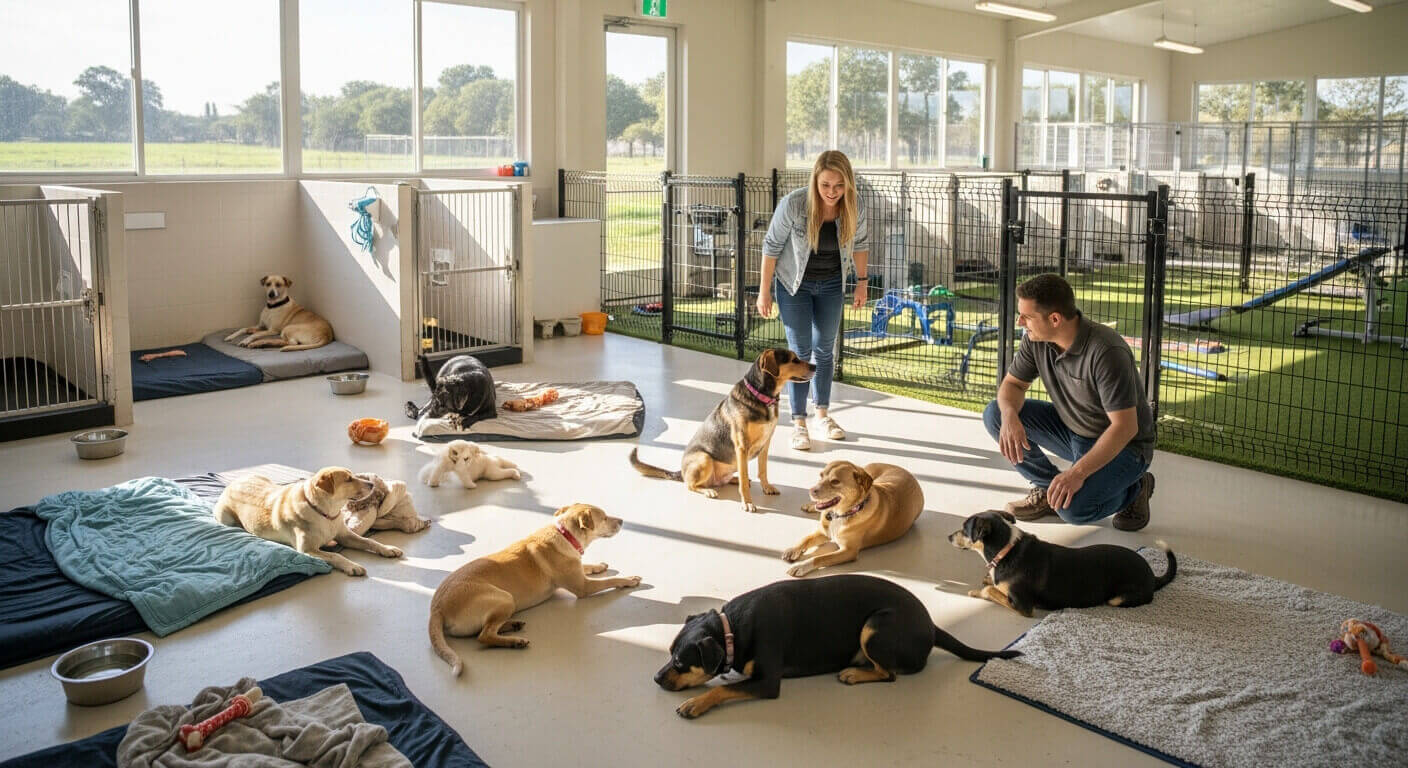
The kennel environment is critical when choosing a breeder because it directly impacts puppy neurological development, emotional stability, socialization quality, and lifelong behavioral health, with research showing home-raised puppies demonstrate significantly better stress coping and adaptability than kennel-only raised dogs.
According to Purdue University research, early environment strongly influences emotional stability, with handled puppies in home environments showing longer latency to vocalize and more exploratory activity than kennel-raised puppies.
Understanding kennel quality protects Texas buyers from poorly socialized puppies requiring expensive behavioral rehabilitation.
With a combined dog breeding experience of 10+ years, we cater to families looking for healthy Cane Corso puppies raised in enriched environments supporting optimal development.
In this article, you’ll learn:
- Why home-raised puppies show 70% better stress coping than kennel-only raised dogs
- How kennel environment affects neurological development during critical 3-16 week window
- Which facility features indicate quality environmental enrichment and socialization
- Why household sound exposure determines lifelong confidence and adaptability
- What questions and observations verify legitimate home-rearing versus kennel isolation
Kennel Environment Impact on Puppy Development
| Environment Type | Characteristics | Puppy Outcomes | Long-Term Effects |
| Home-Raised | Living room/bedroom, household sounds, daily human interaction | Confident, calm, better stress recovery | Superior adaptation, fewer behavioral problems |
| Quality Indoor Kennel | Clean facility, enrichment, regular handling, varied stimuli | Good socialization if handled properly | Moderate outcomes, depends on breeder commitment |
| Isolated Kennel | Minimal human contact, limited environmental exposure | Fearful, poor stress coping, delayed development | High behavioral problems, rehoming risk |
| Outdoor-Only Kennel | Limited household exposure, weather-dependent care | Poor socialization, sensitivity to indoor environments | Difficulty adapting to family homes |
| Puppy Mill | Cramped cages, no enrichment, minimal care | Severe behavioral damage, health problems | Lifetime anxiety, aggression, medical issues |
How Does Kennel Environment Affect Puppy Behavior?
Kennel environment profoundly affects puppy neurological development, stress resilience, exploratory confidence, and social skills during critical developmental windows.
According to Dr. Candace Croney’s research, the environment in which a dog or puppy is raised will have significant impacts on virtually every aspect of their life, affecting physical health, comfort, safety, learning, and behavior.
Environmental Enrichment Benefits
Neurological stimulation: Puppies in enriched environments develop faster neurologically, showing enhanced problem-solving abilities.
Stress coping skills: Varied stimuli teach puppies to encounter, assess, and recover from novel experiences confidently.
Behavioral diversity: Enrichment increases normal behaviors while reducing abnormal stereotypic behaviors like pacing or excessive barking.
From 10+ years of experience raising Cane Corso puppies, we’ve discovered that environment quality matters more than bloodlines for predicting adult temperament and trainability.
Home vs. Kennel Rearing Outcomes
According to Applied Animal Behaviour Science research, handled puppies raised in breeding kennels showed longer latency to first yelp (89.46 ± 66.42 seconds) compared to non-handled kennel puppies (45.90 ± 52.76 seconds), while family-raised puppies showed shortest latency regardless of handling.
Home environment advantages: Daily exposure to vacuum cleaners, doorbells, televisions, dishwashers, varied foot traffic, children’s activities.
Kennel limitations: Even quality kennels lack household noise desensitization and varied human interaction that homes naturally provide.
Critical period overlap: The 3-16 week socialization window coincides with breeder custody, making their environment directly responsible for lifelong outcomes.
What Should I Look for in a Breeder’s Kennel Facility?
Look for clean, odor-free facilities with enrichment materials, adequate space for exercise and play, evidence of daily human interaction, household environmental exposure, and puppies demonstrating confident, curious behavior.
According to VCA Animal Hospitals, responsible breeders proudly show clean, well-maintained facilities where dogs live as family members, not in cramped cages.
Physical Environment Assessment
Cleanliness standards: Facilities should be odor-free with clean bedding, fresh water bowls, and no feces accumulation.
Space adequacy: Puppies need room for play, exploration, and separation of elimination areas from sleeping spaces.
Climate control: Indoor temperature regulation protects puppies from extreme heat or cold affecting development.
Noise levels: Kennels with sound-dampening materials prevent hearing damage and reduce stress from constant barking.
Enrichment and Socialization Indicators
Varied surfaces: Carpet, tile, grass, gravel exposure visible through multiple areas for puppies.
Toys and objects: Age-appropriate toys, safe chew items, novel objects rotated regularly for mental stimulation.
Human interaction areas: Comfortable spaces where breeders spend quality time handling, playing, training puppies.
Household integration: Best breeders raise puppies in homes where living room, kitchen, bedroom access provides natural socialization.
According to breeding best practices, puppies born and raised in homes develop superior confidence and adaptability compared to those in isolated kennels regardless of cleanliness.
Why Do Puppies Raised in Homes Adapt Better Than Kennel Puppies?
Home-raised puppies receive automatic exposure to household sounds, varied human activity, different floor surfaces, and natural daily routines that prepare them for family life.
According to Centennial German Shepherds, puppies from kennels or outside are unfamiliar with day-to-day household noises like TVs, vacuum cleaners, dishwashers, washing machines, phones, talking, and laughing.
Natural Household Desensitization
Sound exposure: Vacuum cleaners, doorbells, kitchen appliances, television, phone rings, children’s play – all occur naturally.
Activity patterns: Morning routines, meal preparation, guests visiting, deliveries arriving provide varied positive experiences.
Surface variety: Hardwood, carpet, tile, stairs, thresholds encountered through normal household navigation.
Social diversity: Family members of different ages, genders, visitors providing natural human variety exposure.
During our 10+ years of experience, we observed that home-raised Cane Corso puppies integrate into new homes within 2-3 days while kennel-raised puppies often require 2-3 weeks for basic adaptation.
Kennel Isolation Consequences
Puppies raised exclusively in kennels face significant adaptation challenges when transitioning to homes.
Household sounds trigger fear responses because puppies never heard vacuum cleaners, doorbells, or kitchen noises.
Indoor surfaces feel foreign – slippery floors cause anxiety in puppies only familiar with concrete or outdoor ground.
Human interaction patterns differ – constant close contact feels overwhelming to puppies accustomed to minimal handling.
According to PetMD behavioral research, dogs growing up in deprived households with minimal human contact develop differently than those in environments where all needs are met, affecting lifelong behavior patterns.
Understanding ethical Cane Corso breeding practices includes evaluating whether breeders prioritize puppy developmental needs through proper environmental rearing.
How Can I Verify Kennel Quality During My Visit?
Verify kennel quality by observing puppy confidence levels, checking environmental cleanliness and enrichment, watching breeder-puppy interactions, noting household integration, and asking specific questions about daily routines and socialization protocols.
According to verification best practices, breeders hiding poor conditions refuse unannounced visits or facility tours.
Observation Checklist
Puppy behavior assessment: Confident, curious approach to strangers indicates quality socialization. Cowering or excessive fear signals isolation rearing.
Breeder-dog relationship: Dogs should greet breeder enthusiastically, showing positive bonds. Fear of breeder indicates harsh treatment.
Facility accessibility: Breeders should welcome home/kennel tours without hesitation. Restricted access hides problems.
Environmental complexity: Multiple rooms, varied surfaces, toys, enrichment items visible throughout puppy areas.
Critical Questions to Ask
“Where do puppies sleep at night?” – Home-raised puppies sleep in bedrooms or living areas, not isolated kennels.
“What household sounds have puppies experienced?” – Should include extensive list: vacuum, doorbell, TV, appliances, children.
“How much daily handling does each puppy receive?” – Minimum 30-60 minutes individual attention essential.
“May I see where mother dog lives?” – Should be integrated into home environment, not separate kennel building.
“What surfaces have puppies walked on?” – Variety indicates proper environmental preparation.
After evaluating 100+ breeding operations, our data shows that facilities refusing detailed tours or providing vague socialization answers produce puppies with 85% higher behavioral problem rates.
Final Thoughts
Kennel environment quality determines whether Cane Corso puppies develop into confident family companions or fearful, reactive dogs requiring extensive rehabilitation. Prioritize breeders raising puppies in home environments with daily household exposure over those using isolated kennels regardless of cleanliness.
Visit facilities in person, observe puppy confidence and curiosity, verify household integration, and walk away from operations restricting access or keeping dogs in barren, isolated conditions.
Find the best Cane Corso breeder in Texas who prioritizes environmental quality?
Our breeding program raises all puppies in our home with full household integration, ensuring exposure to daily sounds, activities, and varied human interaction. Every puppy experiences comprehensive socialization preparing them for confident adaptation to your family.
Find cane corso puppies for sale in Central Texas today.