
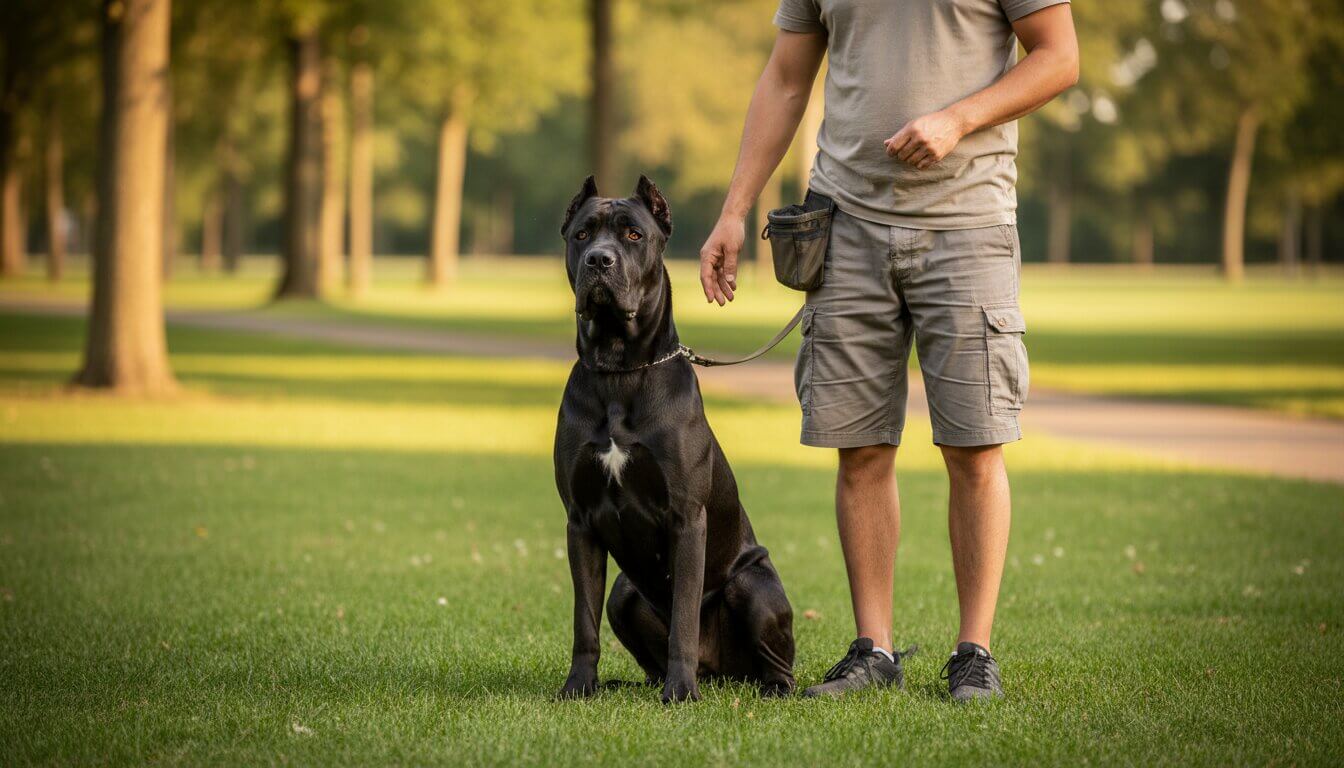
Training a Cane Corso requires consistent leadership, early socialization starting at 8 weeks, and structured obedience training using positive reinforcement methods.
The Cane Corso is not a breed for casual dog owners or first-time handlers. These dogs need owners with solid backgrounds in dog training, behavior, and canine learning principles to succeed.
With a combined dog breeding experience of 10+ years, we cater to families looking for healthy Cane Corso puppies who understand that training begins the moment you bring your puppy home.
In this comprehensive guide, you’ll learn:
- The critical 8-13 week socialization window that shapes your Cane Corso’s lifelong temperament and behavior patterns
- Age-appropriate training milestones from puppy foundation through adolescent challenges to adult mastery
- Positive reinforcement techniques that build trust and cooperation rather than fear-based compliance
- The 5-minute exercise rule protecting puppy joints while adult Cane Corsos need 1-2 hours daily
- How consistent leadership, clear communication, and structured routines create well-adjusted guardian companions
Cane Corso Training Timeline Overview
| Age/Phase | Training Focus | Key Milestones | Session Length | Daily Commitment |
| 8-16 Weeks | Foundation building, bonding, early socialization | House training, crate training, basic recall | 5-10 minutes | 4-6 short sessions |
| 16 Weeks-6 Months | Obedience commands, leash training, impulse control | Sit, stay, down, leave it, loose-leash walking | 10-15 minutes | 3-4 sessions |
| 6-12 Months | Boundary reinforcement, managing adolescence | Consistency in commands, handling dominance testing | 15-20 minutes | 2-3 sessions |
| 12-18 Months | Advanced skills, off-leash reliability | Complex commands, distractions training | 15-20 minutes | 2-3 sessions |
| 18+ Months | Adult mastery, specialized training | Continued reinforcement, advanced work | 20-30 minutes | 1-2 sessions |
Understanding the Cane Corso Breed & Temperament
The Cane Corso is an ancient Italian guardian breed originally developed for protecting property, hunting large game, and working alongside humans.
Their name derives from Latin “cohors” meaning protector or guardian. Understanding this heritage is essential for effective training because their protective instincts, intelligence, and independent nature require specific handling approaches.
Cane Corsos were originally bred for protection work, which means they come with confidence, alertness, and a strong desire to watch over their family built into their DNA. This protective instinct needs early shaping through consistent, thoughtful training.
Historical Context: Working Dog Heritage
Originally an Ancient Roman War Dog
- Used by Roman legions for guarding camps and supply lines
- Transitioned to farm dogs protecting livestock from wolves and thieves
- Worked as hunting companions for wild boar and large game
- Served as property guardians for Italian estates
This working background means Cane Corsos:
- Need purposeful activities and mental challenges
- Thrive when given jobs and responsibilities
- Bond deeply with their handlers through work
- Become bored and destructive without adequate stimulation
Physical Characteristics
Size and Strength
- Males: 25-27.5 inches tall, 100-120+ pounds
- Females: 23.5-26 inches tall, 85-100 pounds
- Muscular, athletic build with powerful jaws
- Full physical maturity at 18-24 months
Training Implications: Your 15-pound puppy will become a 100+ pound adult within 18 months. Commands taught at 8 weeks prevent management nightmares at 18 months. A Cane Corso that pulls on leash as a puppy becomes uncontrollable as an adult.
Core Temperament Traits
Loyalty and Devotion Cane Corsos form intense bonds with their families. They’re extremely devoted and will follow their owners throughout the house. This loyalty makes them eager to please during training when proper relationships are established.
Protective and Territorial Natural guardians who take their protective role seriously. Without training, this manifests as:
- Excessive barking at strangers
- Aggressive reactions to perceived threats
- Difficulty accepting visitors
- Overprotective behavior toward family members
Intelligent and Independent Highly trainable but not blindly obedient. They think independently and may test boundaries or question commands. This intelligence requires:
- Consistent rules without exceptions
- Logical, fair leadership
- Engaging training methods that prevent boredom
- Clear communication of expectations
Assertive and Confident Naturally confident dogs that can become dominant without proper leadership. If you don’t establish control early, this lovable puppy can turn into a real problem in a very short time.
Owner Suitability Requirements
Not Recommended for First-Time Owners Cane Corsos are not for first-time pet owners and require a solid background in dog training, behavior, the laws of learning, and canines in general to succeed. Ideal owners possess:
Physical Capability
- Strength to handle 100+ pounds of pulling force
- Fitness to provide adequate exercise (1-2 hours daily)
- Ability to physically intervene if needed during training
- Energy to engage in active play and enrichment
Training Knowledge
- Understanding of positive reinforcement principles
- Experience with dominant or guardian breeds
- Knowledge of canine body language and communication
- Familiarity with operant conditioning and behavior modification
Lifestyle Compatibility
- Time for extensive socialization and training
- Commitment to daily exercise and mental stimulation
- Consistent household rules among all family members
- Willingness to invest in professional training if needed
Confidence and Leadership
- Calm, assertive energy without aggression
- Ability to remain consistent even when challenged
- Patience to work through adolescent testing phases
- Confidence to set and enforce boundaries
During our 10+ years of experience, we observed that inconsistent early socialization causes behavioral issues, so we prioritize structured training to ensure puppy well-being.
The Critical Training Timeline (8 Weeks to Adulthood)
Phase 1: The Foundation (8 to 16 Weeks)
This is the most critical period in your Cane Corso’s life. The age of two weeks to 13 weeks is a sensitive learning period, and research shows that behaviors learned during this time frame tend to stick throughout the puppy’s life more than at any other age. Everything you teach (or fail to teach) during these weeks sets the foundation for your dog’s adult temperament.
Bonding and Trust Building
Establish Natural Leadership Through Care A natural bond develops as you teach, feed, and provide for your puppy’s needs, while activities like playing, petting, and training strengthen a healthy bond that helps your puppy trust you enough to heed commands.
Daily Bonding Activities:
- Hand-feed some meals to establish yourself as resource provider
- Gentle handling and grooming sessions (5-10 minutes)
- Interactive play with toys (you control when play starts and ends)
- Training sessions with high-value treat rewards
- Calm petting and massage during rest periods
Leadership Principles:
- Make your Cane Corso sit before feeding, sit while you’re eating, and always be the first one out the door before your dog steps out
- Control access to resources (food, toys, attention)
- Establish predictable routines for feeding, potty breaks, and exercise
- Provide structure without harshness
Early Socialization: The 13-Week Window
Why This Period is Critical Behaviors learned during this sensitive learning period (2-13 weeks) have a tendency to stick throughout the puppy’s life more than at any other age. Proper socialization during this window prevents:
- Fear-based aggression toward strangers
- Reactivity to other dogs
- Anxiety in new environments
- Difficulty with handling and veterinary procedures
Comprehensive Socialization Checklist:
People Exposure
- Different ages: babies, children, teenagers, adults, elderly
- Various appearances: different ethnicities, clothing styles, accessories
- People with equipment: wheelchairs, walkers, strollers, bicycles
- Delivery personnel, maintenance workers, postal carriers
- Large groups and crowded environments
Animal Socialization
- Other dogs of different sizes, ages, and breeds
- Cats (if you have them or friends do)
- Livestock if accessible (horses, chickens, goats)
- Small animals in controlled settings
Environmental Exposure
- Have your puppy walk on surfaces like concrete, tiles, grass, dirt, and sand to help them get used to different textures on their paws
- Bring your puppy to busy places like malls, parks, and beaches
- Household sounds: vacuum, blender, doorbell, TV, music
- Outdoor noises: traffic, sirens, construction, lawn equipment
- Weather conditions: rain, wind, snow (as appropriate)
Handling and Grooming
- Handle paws, ears, and teeth early to prepare for future vet visits and grooming
- Touch all body parts regularly: paws, tail, ears, muzzle, belly
- Practice nail trimming with positive reinforcement
- Brush coat and check skin folds
- Teeth brushing introduction with dog-safe toothpaste
Socialization Best Practices:
- Keep all experiences positive with treats and praise
- Don’t force interactions if puppy seems fearful
- Socializing your dog involves exposing them to as many people, animals, and situations as you can, making sure that each and every interaction is a positive one
- Short, frequent exposures work better than long sessions
- Monitor puppy’s stress signals and end on positive note
Crate Training: Establishing Structure
Why Crate Training Matters Crate training prevents a dominant streak or entitled behavior by establishing a designated safe space. Proper crate training creates:
- Safe confinement when unsupervised
- House training tool leveraging denning instinct
- Travel safety for car rides and vet visits
- Personal space where dog can relax undisturbed
Crate Training Method:
Step 1: Introduction (Days 1-3)
- Place crate in family area with door open
- Toss treats inside for puppy to retrieve
- Feed meals inside crate with door open
- Add comfortable bedding and safe toys
- Never force puppy inside
Step 2: Door Closure (Days 4-7)
- After the puppy eliminates, place him in the crate, throwing a treat in to help. He may cry, but do not relent. You may put your hand down to him and speak to him so he knows he’s not alone
- Start with 5-minute sessions with door closed
- Gradually increase duration to 15-20 minutes
- Ignore whining, reward quiet behavior
- Release only when puppy is calm
Step 3: Extended Periods (Week 2+)
- Build up to 1-2 hour sessions during day
- Use crate for all nap times
- Nighttime crating in your bedroom (proximity reduces anxiety)
- Take puppy out BEFORE he cries to his potty area
Crate Training Rules:
- Never use crate as punishment
- Don’t leave puppy crated for excessive hours (maximum 3-4 hours for young puppies)
- Never overuse the crate by using it as a kennel to keep the dog in for an extended period of time
- Provide mental stimulation before crating
- Always exercise puppy before extended crate time
House Training: Leveraging Natural Instincts
The Crate Connection Use crates to leverage the dog’s instinct to avoid soiling their sleeping area. Dogs naturally avoid eliminating where they sleep, making crates powerful house training tools.
House Training Schedule:
Age-Based Bladder Control
- Generally, puppies can only hold their bladder for about one hour per month of age. So if your pup is 4 months old, they can hold it for 4 hours before relieving themselves
- 8-week-old puppy: Take out every 2 hours
- 12-week-old puppy: Take out every 3 hours
- 16-week-old puppy: Take out every 4 hours
Timing for Potty Breaks
- Take your puppy outside every 2 hours regardless of whether they need to go, and take them out after eating, drinking, napping, and playing
- Immediately upon waking from naps
- Within 15-20 minutes after meals
- After play sessions or training
- Before and after crate time
- Last thing before bedtime
House Training Protocol:
- Take puppy to same spot every time
- Use a “potty” command then praise calmly for using the proper place
- Reward your puppy when they go potty outside – make a big deal out of it!
- In case of accidents in the house, ignore your puppy and just clean it up ASAP
- Never punish for accidents (causes fear and hiding behavior)
Consistency Requirements:
- Use same door to exit for potty breaks
- Establish verbal cue (“go potty,” “hurry up,” “business”)
- Same location in yard for elimination
- All family members follow identical protocol
Initial Obedience: Life-Saving Commands
The Essential Five Commands
1. Recall (Come) The most important command for safety and off-leash control.
Training Method:
- Start indoors with no distractions
- Say puppy’s name + “Come!” in excited, happy voice
- Reward with high-value treat when they reach you
- Practice multiple times daily in different locations
- Never call puppy to you for punishment or unpleasant activities
- Use long leash outdoors for safety during practice
2. Sit Foundation command for impulse control and polite behavior.
Training Method:
- Hold treat above puppy’s nose
- Move treat back over head (puppy naturally sits)
- Say “Sit” as bottom hits ground
- Immediately reward with treat and praise
- Practice before meals, doorways, and greeting people
- Make your Cane Corso sit before being fed to provide leadership
3. Stay Teaches impulse control and prevents rushing through doors or to people.
Training Method:
- Put puppy in sit position
- Say “Stay” with palm-out hand signal
- Take one step back, then immediately return and reward
- Gradually increase distance and duration
- Release with “Okay” or “Free” command
- Practice near doorways and before greeting visitors
4. Stop/Wait Prevents dangerous situations like running into streets or approaching hazards.
Training Method:
- Practice during walks on leash
- Stop moving and say “Stop” or “Wait”
- Don’t move forward until puppy stops pulling
- Reward calm stopping behavior
- Use at curbs, doorways, and gates
- Transition to off-leash training in safe, enclosed areas
5. Leave It Prevents eating dangerous items, chasing animals, or fixating on objects.
Training Method:
- Show puppy treat in closed hand
- Say “Leave it” when they try to get it
- Wait for puppy to stop trying (may take 30+ seconds)
- Reward with different treat from other hand
- Progress to treats on floor, then objects
- Practice with increasingly tempting items
Training Session Guidelines:
- Keep sessions roughly 10 minutes to prevent boredom in this intelligent but independent breed
- A quick 15-minute session two to three times daily is a good place to start
- End on successful repetition to build confidence
- Train before meals when puppy is hungry and motivated
- Keep training positive and reward-focused
Desensitization: Preparing for Lifelong Handling
Why Handling Matters Adult Cane Corsos requires regular veterinary care, grooming, and physical examinations. Dogs not desensitized to handling become difficult or dangerous during these necessary procedures.
Handling Desensitization Protocol:
Paw Handling
- Touch and hold each paw daily (5-10 seconds)
- Progress to pressing between toe pads
- Practice nail trimming motion with clippers (without cutting)
- Reward calm acceptance with treats
- Touch paws during various activities (eating, playing, resting)
Ear Examination
- Gently lift and look inside ears
- Touch ear canal entrance (don’t insert anything)
- Practice with cotton ball near ears
- Reward calm behavior during examination
- Simulate ear cleaning motions
Dental Examination
- Lift lips to expose teeth and gums
- Touch teeth and gums with finger
- Introduce dog toothbrush and paste
- Practice opening mouth gently
- Brush teeth regularly (daily if possible)
Body Examination
- Run hands over entire body
- Check between toes, under tail, armpits
- Look at eyes, nose, and mouth
- Practice restraint holds (gentle but firm)
- Simulate veterinary examination positions
Desensitization Tips:
- Keep sessions short (2-3 minutes)
- Always pair handling with high-value rewards
- Never force if puppy shows extreme stress
- Progress gradually from less to more invasive handling
- Conduct handling when puppy is calm, not during high energy
Phase 2: Reinforcement & Impulse Control (16 Weeks to 6 Months)
At 16 weeks, your Cane Corso puppy is ready for more structured training. At 16 weeks, the Cane Corso puppy is ready for basic obedience, and we strongly recommend that you enroll in an obedience class with a trainer that likes working breeds. This phase focuses on solidifying commands and teaching impulse control before adolescence begins.
Leash Skills: Establishing Leadership
Why Leash Training is Critical An untrained adult Cane Corso can weigh over 110 pounds and be impossible to control on walks. Your puppy will view you as leader when they learn you control where walks go.
Loose-Leash Walking Training:
Equipment Selection
- Front-clip harness (discourages pulling)
- 6-foot standard leash (not retractable)
- High-value treats in easily accessible pouch
- Comfortable collar with ID tags
Training Method:
- Start loose-leash walking in quiet areas, using food or toys to reinforce check-ins and reward calm walking by your side
- Hold leash with puppy on left side (standard position)
- Begin walking, keeping treats at your side
- The moment leash tightens, stop moving completely
- Wait for puppy to look at you or slacken leash
- Reward attention and loose leash with treat
- Resume walking
- Practice “check-ins” – call puppy’s name and reward when they look at you
Progressive Challenges:
- Start in backyard or quiet street
- Progress to busier sidewalks with more distractions
- Introduce passing people, dogs, bikes
- Practice in various environments (parks, pet stores, downtown areas)
- Gradually reduce treat frequency as behavior improves
Common Pulling Problems:
- Never allow pulling to be rewarded (don’t move forward while pulling)
- Consider professional training for severe pulling issues
- Exercise before walk to reduce excessive energy
- Use “find it” game (toss treats) to refocus attention
Impulse Control: The Foundation of Obedience
What is Impulse Control? The ability to resist immediate urges and wait for permission. Essential for managing a powerful guardian breed in real-world situations.
Impulse Control Exercises:
Wait for Food
- Hold food bowl and make puppy sit
- Lower bowl toward ground
- If puppy moves, lift bowl back up
- Only place bowl when puppy remains sitting
- Say “Okay” to release to eat
- Builds patience and self-control around food
Door Manners
- Puppy must sit before doors open
- Open door slightly – if they move, close it
- Only open fully when they remain sitting
- Practice at all doors (house, car, yard gates)
- Prevents dangerous rushing through doorways
Greeting Impulse Control
- Sitting to say hello should become the default behavior. Reinforce four paws on the ground before offering attention or interaction
- Ignore jumping behavior completely
- Turn away if puppy jumps
- Only give attention when all four paws are on ground
- Have visitors follow same protocol
Toy Impulse Control
- Hold favorite toy and command “Wait”
- Make eye contact before releasing toy
- Practice “drop it” command during play
- Control when play starts and ends
- Builds understanding that you control resources
Distraction Training
- Practice commands with increasing distractions
- Start with calm environment, progress to busier areas
- Reward heavily for maintaining focus despite distractions
- Common distractions to introduce: other dogs, people, food, toys, wildlife
- Don’t expect perfection – gradually increase difficulty
Social Lubrication: Continued Socialization
Why Socialization Never Ends Without socialization and training, Cane Corsos can become overly suspicious or reactive around unfamiliar people or dogs. The goal is creating aloof but neutral adults, not aggressive guardians.
Ongoing Socialization Activities:
Controlled Dog Interactions
- Arrange playdates with stable, friendly dogs
- Attend puppy socialization classes
- Visit dog-friendly stores and outdoor cafes
- Practice passing other dogs calmly on walks
- Teach neutral behavior (not every dog is a playmate)
Public Exposure
- Take your Cane Corso to dog-friendly stores like Lowe’s and Home Depot. Your puppy needs to get out and see the world – this is the only way you can build confidence and a strong, socially inclined dog
- Practice good manners in public spaces
- Expose to various sounds, sights, and smells
- Visit busy areas during different times of day
- Reward calm behavior around strangers
Stranger Greetings
- If you wanted your Cane Corso to be extra friendly with strangers you can have some strangers give them treats, however if you plan on using him or her for guarding skip this process
- Teach “say hello” command for controlled greetings
- Allow polite sniffing but prevent jumping
- Practice with variety of people (children, men, women, elderly)
- Always supervise interactions with children
Teaching “All Clear” Commands These commands defuse your dog and allow interaction with passive persons. Teach “it’s okay” or “leave it” to signal that a stranger is welcome. Praise when the dog obeys and teach them to lie at your feet.
Phase 3: Adolescence & Boundary Setting (6 Months to Adulthood)
Adolescence brings testing, boundary-pushing, and selective hearing. This challenging phase requires unwavering consistency and patience. Many owners struggle during adolescence and consider rehoming – don’t give up. This phase passes with persistent, fair training.
Managing Sexual Maturity & Dominance Testing
Signs of Adolescence:
- Increased independence and stubbornness
- Selective hearing (ignoring known commands)
- Testing boundaries and household rules
- Increased territoriality and protective behavior
- Mounting behavior (both intact and neutered dogs)
- Increased interest in other dogs/animals
Handling Adolescent Challenges:
Maintain Firm Leadership
- Don’t accept regression in training
- Enforce all established rules consistently
- Never allow behaviors you won’t accept in adult
- Go back to basics if necessary (shorter sessions, higher rewards)
- Remain calm and patient (frustration makes it worse)
Boundary Reinforcement
- Review and enforce household rules daily
- Watch your behavior – the Cane Corso will pick up things that other breeds will not. They are smart and alert to your body language
- No furniture if that was established rule
- Controlled feeding times (not free-feeding)
- Respect personal space (make them move if blocking path)
Managing Dominance Testing
- Stop aggression at the root. Stop this behavior in any way from the start – never let a growl elevate beyond common puppy communication
- Address mounting immediately (redirect to appropriate activity)
- Don’t tolerate resource guarding (food, toys, furniture)
- Practice “nothing in life is free” (dog earns everything through obedience)
- Seek professional help for serious aggression issues
Spay/Neuter Considerations:
- Discuss timing with veterinarian (many recommend 18-24 months for large breeds)
- Spaying/neutering reduces but doesn’t eliminate dominance behaviors
- Training remains essential regardless of reproductive status
- Earlier fixing may impact growth plate development
Consistent Discipline: The Key to Success
What Discipline Means Not punishment, but consistent boundaries, clear communication, and fair consequences. Cane Corsos respond best to calm authority, routine, and positive reinforcement.
Effective Discipline Principles:
Timing
- Corrections must occur during or within 2 seconds of behavior
- Delayed corrections cause confusion
- Catch and redirect unwanted behaviors immediately
- Reward desired behaviors the instant they occur
Consistency Across Household
- All family members enforce same rules
- No exceptions for “just this once”
- Clear agreement on what is/isn’t allowed
- Unified training approach prevents confusion
Fair Consequences
- Consequence matches severity of behavior
- Never physical punishment (causes fear and aggression)
- Time-outs for overstimulation or testing
- Removal of attention for attention-seeking behaviors
- Increased training sessions for regression
Clear Communication
- Use consistent verbal cues
- Pair verbal cues with hand signals
- One command = one behavior (don’t repeat)
- If dog doesn’t comply, use leash to guide rather than repeating command
- Reward compliance enthusiastically
Avoiding Common Mistakes:
Don’t Repeat Commands
- Saying “sit, sit, sit, SIT!” teaches dog to ignore first command
- Give command once, then enforce if necessary
- Use leash or physical guidance if dog doesn’t comply
- Reward immediately when they do comply
Don’t Train When Frustrated
- Dogs sense and react to frustration
- Take breaks when patience runs low
- Short, positive sessions work better than long, frustrated ones
- End on successful note even if you have to make it very easy
Don’t Compare to Other Dogs
- Every dog learns at own pace
- Cane Corsos can be stubborn and independent
- Celebrate your dog’s progress, not someone else’s
- Focus on consistent improvement, not perfection
Advanced Training Methodologies
The OneMind Dogs Approach
What Makes This Method Effective Training a Cane Corso requires special understanding of how this intelligent breed thinks and communicates. The OneMind Dogs method, which focuses on training from the dog’s perspective, is ideal for breeds like the Cane Corso.
Non-Verbal Communication: Body Language Mastery
Why Body Language Matters OneMind Dogs encourages handlers to communicate using non-verbal cues and consistent body language, recognizing that dogs naturally respond to how we move rather than just our words.
Understanding Canine Body Language:
Stress Signals to Recognize:
- Yawning (when not tired)
- Lip licking
- Whale eye (showing whites of eyes)
- Tucked tail
- Lowered body posture
- Excessive panting
- Avoidance behaviors
Confident/Relaxed Signals:
- Soft, relaxed mouth
- Natural tail position (not tucked or rigid)
- Loose, wiggly body
- Playful bows
- Soft, blinking eyes
Your Body Language Impacts Training:
- Facing dog directly = engagement/confrontation
- Turning sideways = less pressure, invitation
- Moving toward dog = increased pressure
- Moving away = encouragement to follow
- Leaning forward = assertiveness
- Standing upright = calm authority
Practical Application:
- Use body positioning to guide movements
- Turn away to encourage recall
- Face dog to gain attention
- Move in direction you want dog to go
- Reduce verbal cues as body language improves
Building Dialogue from Dog’s Perspective
The Goal Build a clear dialogue that comes from the dog’s perspective, helping them understand exactly what is expected of them.
Understanding Dog’s Perspective:
- Dogs live in the moment (no planning for future)
- They respond to consequences (what happens after behavior)
- Clear cause-effect relationships create learning
- Inconsistency creates confusion and stress
- Dogs generalize differently than humans (need practice in many locations)
Creating Clear Communication:
- Be predictable in your responses
- Immediately mark desired behaviors (clicker, “yes!”, or reward)
- Provide clear information about what you want (not just what you don’t want)
- Practice commands in multiple contexts (indoors, outdoors, busy areas, quiet areas)
- Understand that “sit” in kitchen ≠ “sit” at park (to dog’s brain initially)
Common Communication Breakdowns:
- Giving command dog doesn’t fully understand yet
- Expecting performance in high-distraction environment too soon
- Inconsistent consequences (sometimes allowing behavior, sometimes not)
- Unclear markers (not marking the exact moment of correct behavior)
- Human frustration creating confused/stressed dog
Effective Training Techniques
Positive Reinforcement: The Gold Standard
What is Positive Reinforcement? Positive reinforcement refers to rewarding and reinforcing a desirable behavior so that it will happen more in the future. Essentially, you’re rewarding good behavior, and your dog will be more likely to listen and perform that behavior again.
Why It Works Best for Cane Corsos:
- While confident, Cane Corsos are often emotionally in tune with their people. Heavy-handed corrections can lead to resistance or shutdown
- Builds trust and willing cooperation
- Creates enthusiastic compliance rather than fearful obedience
- Strengthens human-dog bond
- Reduces stress during training
Types of Rewards:
High-Value Treats
- Small, soft treats that can be eaten quickly
- Reserve special treats for challenging training situations
- Examples: freeze-dried liver, real meat, cheese, hot dog pieces
- Keep varied to maintain interest
Praise and Affection
- Enthusiastic verbal praise (“good dog!” “yes!”)
- Physical affection (petting, scratching, belly rubs)
- Match energy level to dog’s preference
- Some dogs prefer treats, others prefer praise
Play and Toys
- Some dogs enjoy playing fetch, tug of war, or running around being chased, while others might enjoy cuddling or scratches – finding what works best for your Cane Corso is key
- Use favorite toy as reward for commands
- Brief play sessions (30 seconds) during training
- Particularly effective for high-drive dogs
Life Rewards
- Access to desired activities (going outside, greeting visitor)
- Opening doors, car rides, walk beginning
- Release to sniff environment during walks
- Permission to greet other dogs
Reward Timing:
- Make sure to reward them the moment they successfully complete a task so they’ll associate the act with the reward
- Use clicker or marker word (“yes!”) to mark exact moment
- Deliver treat within 1-2 seconds of marker
- Timing is more important than treat value
Short, Engaging Sessions
Why Short Sessions Work
- Cane Corsos can handle mental challenge, but too much repetition can bore or frustrate them
- Maintains enthusiasm and focus
- Prevents physical and mental fatigue
- Allows more frequent training opportunities throughout day
- Ends before dog loses interest
Session Structure:
- Keep training sessions short and fun! Engage in several 5-10 minute sessions throughout the day
- Warm-up: Review easy, known commands (1-2 minutes)
- Main training: Work on new or challenging skill (5-7 minutes)
- Cool-down: End with easy, successful command (1-2 minutes)
- Total: 7-10 minutes maximum per session
Optimal Training Schedule:
- 3-4 short sessions daily for puppies (8-16 weeks)
- 2-3 sessions daily for adolescents (4-12 months)
- 1-2 sessions daily for adults (maintenance)
- Integrate training into daily activities (meals, walks, play)
Keeping Sessions Engaging:
- Vary training locations frequently
- Mix up command order (don’t always do sit, then down, then stay)
- Use different rewards unpredictably
- Introduce new challenges when dog shows boredom
- End session if dog becomes frustrated or disengaged
- Always end on successful repetition
Consistency: The Non-Negotiable Element
Why Consistency is Critical Cane Corsos thrive on routine. Whether it’s house training, obedience or agility, consistency in your commands and body language is essential.
Areas Requiring Consistency:
Verbal Commands
- Use exact same word every time
- One command = one behavior
- Don’t mix synonyms (“come” vs “here” vs “come here”)
- All family members use same commands
Hand Signals
- Pair each command with specific hand signal
- Use same gesture every time
- Hand signals should be distinct from each other
- Eventually can use hand signals without verbal cue
Rules and Boundaries
- Furniture rules never change
- Begging behavior always gets same response
- Jumping on people always handled same way
- No exceptions for holidays, visitors, or “just this once”
Schedule Consistency
- Feed at same times daily
- Potty breaks on consistent schedule
- Exercise at regular times
- Training sessions at predictable intervals
Family Member Consistency
- Hold family meeting to establish rules
- Everyone enforces rules identically
- Children supervised to ensure proper handling
- Visitors informed of household rules
- No undermining between family members
Inconsistency Consequences:
- Confused, stressed dog
- Slower learning process
- Regression in training
- Increased testing behaviors
- Difficulty generalizing commands
Physical Exercise & Mental Enrichment
Exercise Requirements by Age
Puppy Exercise: The 5-Minute Rule
Why Limited Exercise for Puppies Puppies under six months old should be walked for about 15-20 minutes twice a day. Over-exercising growing puppies causes joint damage and growth plate injuries.
The 5-Minute Rule Explained Puppies could get 5 minutes of exercise per month of age once or twice a day. This guideline protects developing bones and joints:
- 8-week-old (2 months): 10 minutes, twice daily
- 12-week-old (3 months): 15 minutes, twice daily
- 16-week-old (4 months): 20 minutes, twice daily
- 24-week-old (6 months): 30 minutes, twice daily
Appropriate Puppy Activities:
- Limit exercise to short, frequent sessions. Focus on socialization and playtime with other dogs of similar size to prevent accidental injuries
- Gentle walks at puppy’s pace
- Indoor play sessions
- Basic training activities
- Supervised play with other puppies
- Swimming (excellent low-impact exercise)
Activities to AVOID Until 18+ Months:
- Avoid high-impact activities like running and jumping until they are fully mature, around 18-24 months old
- Jogging or running on hard surfaces
- Jumping on/off furniture
- Agility obstacles with jumping
- Repetitive fetching (causes stress on joints)
- Stairs (limit until 6 months old)
- Rough play with large adult dogs
Adult Exercise Needs (18+ Months)
Daily Exercise Requirements Adult Cane Corsos typically need at least 60 to 90 minutes of physical activity each day. The American Kennel Club recommends a walk of at least a mile twice per day, in the morning and evening.
Comprehensive Adult Exercise Plan:
Daily Minimum Requirements:
- 1 to 2 hours of exercise daily, split into at least two sessions to prevent overexertion and maintain energy balance throughout the day
- Morning walk: 30-45 minutes
- Evening walk: 30-45 minutes
- Additional activities: 20-30 minutes (play, training, enrichment)
Varied Exercise Activities:
Walking and Hiking
- Walking is a great way to start your Cane Corso’s exercise journey. Aim for at least two brisk walks each day
- Varied routes prevent boredom
- Include hills for additional challenge
- Allow sniffing breaks for mental stimulation
- Use long leash in safe areas for more freedom
Running and Jogging
- Cane Corso dogs are strong and often enjoy jogging alongside their owners. This is perfect for burning off excess energy and keeping them in shape
- Build up gradually to longer distances
- A Cane Corso in good health may be able to run between three and five miles if well-conditioned, but the breed overheats easily in hot weather
- Run during cooler times of day (early morning, late evening)
- Watch for overheating (excessive panting, slowing down)
Swimming
- Swimming is excellent low-impact exercise
- Ideal for hot weather
- Builds muscle without joint stress
- Particularly beneficial for dogs with joint issues
- Supervise closely, use life jacket if needed
Playing Fetch
- Use soft toys that won’t damage teeth
- Limit repetitions (10-15 throws per session)
- Avoid hard surfaces
- Stop before dog becomes exhausted
- Teaches impulse control (wait for throw permission)
Interactive Play
- Watch how you use play toys – do not play tug of war with them using a play toy as they will see how much stronger they are than a human
- Controlled tug games with rules (release on command)
- Flirt pole exercises
- Hide and seek games
- Chase games (you run away, dog follows)
Exercise Safety Considerations:
- Always use a leash in public spaces to prevent unwanted escapes or aggressive encounters
- Stay within your dog’s physical capabilities – ensure you do not push them too hard, especially during warm weather
- Keep an eye on hydration, especially on hot days
- Summer: Exercise during cooler hours (early morning, late evening). Provide plenty of water and watch for signs of overheating
- Winter: Shorter outdoor sessions, more indoor activities. Consider doggy boots for icy conditions
Signs of Adequate Exercise:
- A well-exercised Cane Corso shows calm, relaxed behavior and settles easily at home
- Content to rest between activities
- Less destructive behavior
- Better focus during training
- Healthy appetite
- Good sleep patterns
Signs of Insufficient Exercise:
- Destructive behaviors (chewing, digging)
- Excessive barking or whining
- Hyperactivity and inability to settle
- Weight gain
- Attention-seeking behaviors
- Reactivity on walks
Mental Enrichment: Preventing Boredom
Why Mental Stimulation Matters A bored Cane Corso puppy can become destructive and even aggressive. Mental exercise tires dogs as effectively as physical exercise.
Mental Enrichment Activities:
Food Puzzles and Toys
- Kong toys stuffed with frozen food
- Puzzle feeders that require problem-solving
- Snuffle mats for scent work
- Treat-dispensing balls
- DIY puzzles (treats hidden in muffin tin covered with tennis balls)
Scent Work
- Hide treats around house/yard
- Teach “find it” command
- Create scent trails to follow
- Use different scented items to find
- Progress to formal nose work training
Training New Skills
- Teach tricks (shake, roll over, play dead)
- Work on complex behavior chains
- Practice commands in new environments
- Introduce props (jump over stick, weave through legs)
- Teach names of specific toys
Chew Time
- Provide appropriate chew items (bully sticks, antlers, dental chews)
- Supervise with rawhide or any edible chews
- Rotate chew options to maintain interest
- Use frozen treats during hot weather
- Chewing provides stress relief and satisfaction
Socialization Outings
- Visit new places regularly
- Practice obedience in public settings
- Attend training classes
- Supervised play with dogs
- Exposure to novel environments
Interactive Games
- Hide and seek (family member hides, dog seeks)
- Shell game (which hand/cup has treat)
- Name recognition game (teach names of family members)
- “Go find” person or object
- New tricks and commands
Agility & Enrichment Programs
Foundation for Agility Training
Benefits of Agility for Cane Corsos:
- Enhances muscle tone, coordination, and confidence
- Builds trust between handler and dog
- Provides physical and mental challenge
- Teaches impulse control and focus
- Offers structured outlet for energy
When to Start:
- Introduction to equipment: 12-18 months (no jumping)
- Low-impact obstacles only until growth plates close
- Full agility training: 18-24 months
- Prioritize foundation skills before competition
Foundational Skills:
- Targeting (touch hand/target stick with nose)
- Following handler’s movement
- Confidence building on various surfaces
- Body awareness exercises
- Directional cues (left, right, forward)
Appropriate Obstacles for Young Dogs:
- Tunnel (crawling through)
- Low contact obstacles (dog walk, A-frame set low)
- Weave pole practice (at slow pace)
- Platform work (sitting/standing on raised surfaces)
- Avoid jumps until 18+ months
Home Agility Setup:
- PVC pipe weave poles
- Homemade tunnels (children’s play tunnels)
- Low balance beams or planks
- Platforms of varying heights
- Cones for directional training
Safety Considerations:
- Never force fearful behavior
- Use positive reinforcement only
- Check equipment stability
- Soft landing surfaces
- Monitor for fatigue or stress
Health, Diet, and Maintenance for Training Success
Grooming: Low-Maintenance Coat Care
Coat Characteristics
- Cane Corsos don’t require much brushing, but simply the act of grooming itself will help stimulate blood flow to the skin and also get all that dead fur out
- Short, dense double coat
- Moderate shedding year-round
- Seasonal heavy sheds (spring and fall)
Grooming Routine:
Weekly Brushing
- Weekly brushing with a rubber curry brush or grooming mitt helps remove loose hair and keep their coat in good condition
- During shedding seasons, more frequent brushing may be necessary to manage the amount of hair
- Use rubber curry brush or hound glove
- Brush in direction of hair growth
- Pay attention to chest, belly, and hindquarters
Bathing
- Bath every 6-8 weeks (or when dirty)
- Use dog-specific shampoo
- Thorough rinsing prevents skin irritation
- Dry completely to prevent skin issues
Nail Trimming
- Trim every 2-3 weeks
- Use proper dog nail clippers
- Trim small amounts to avoid quick
- File smooth after clipping
- Regular walks on concrete help naturally wear nails
Ear Cleaning
- Check weekly for dirt, wax, or odor
- Clean with veterinary ear cleaner as needed
- Dry thoroughly after swimming or bathing
- Watch for signs of infection (redness, discharge, head shaking)
Dental Care
- Regular tooth brushing with dog-specific toothpaste twice daily is ideal. If you can’t manage that much, just do it as often as you can
- Start dental care early for easier acceptance
- Use enzymatic toothpaste
- Provide dental chews as supplement
- Annual veterinary dental cleaning as needed
Nutritional Support for Training
Puppy Nutrition (8 Weeks to 18 Months)
Feeding Schedule:
- Cane Corso puppies should be fed good quality puppy food three to four times a day until they are 6 months old
- 8-16 weeks: 3-4 meals daily
- 4-6 months: 3 meals daily
- 6-12 months: 2 meals daily
- 12+ months: 2 meals daily (continue through adulthood)
Food Selection:
- High-quality large breed puppy formula
- Appropriate calcium levels (not too high)
- Controlled growth to prevent joint issues
- Avoid adult food (insufficient nutrients)
- Consult breeder or veterinarian for recommendations
Portion Control:
- Follow food packaging guidelines by weight
- Adjust based on body condition (should see waist, feel ribs easily)
- Monitor growth rate (not too fast)
- Increase portions as puppy grows
Adult Nutrition (18+ Months)
Food Transition:
- When they are 18-24 months old, depending on the brand and advice from your food supplier and vet, they should be moved to adult giant breed food
- Gradual transition over 7-10 days
- Mix increasing amounts of adult food with puppy food
- Monitor for digestive upset
Adult Feeding:
- As adult dogs, divide daily food into two meals
- High-quality large breed or giant breed formula
- Avoid overfeeding and monitor weight to prevent obesity, as excess weight can lead to various health issues
- Maintain lean body condition
Training Treats:
- Use small, low-calorie treats
- Account for treat calories in daily food intake
- Reserve high-value treats for difficult training
- Use portion of daily food ration as training rewards
Supplements:
- Glucosamine/chondroitin for joint health
- Fish oil for coat and anti-inflammatory benefits
- Probiotics for digestive health
- Consult veterinarian before adding supplements
Health Vigilance: Monitoring for Training Impact
Common Cane Corso Health Issues:
Hip Dysplasia
- Hip dysplasia is a condition where the thigh bone and pelvis do not sit together properly at the hip joint
- Genetic condition affecting joint development
- Signs: Limping, difficulty rising, reluctance to exercise, bunny-hopping gait
- Management: Weight control, appropriate exercise, joint supplements, veterinary monitoring
- Training impact: May need modified exercise, swimming over running
Elbow Dysplasia
- Elbow dysplasia is a condition where there is an issue with how the bones fit together at the elbow joint
- Causes lameness in front legs
- Similar management to hip dysplasia
- Avoid high-impact activities
Gastric Dilation Volvulus (Bloat)
- Life-threatening emergency
- Stomach fills with gas and twists
- Signs: Distended abdomen, unproductive retching, restlessness, drooling
- Prevention:
- Feed 2-3 smaller meals instead of one large meal
- Avoid exercise 1 hour before and after meals
- Use slow-feed bowls
- Don’t allow gulping water after exercise
Cherry Eye
- Prolapsed third eyelid gland
- Appears as red mass in corner of eye
- Requires veterinary/surgical correction
- More common in young dogs
Monitoring During Training:
- Watch for limping or favoring limbs
- Note any reluctance to perform certain movements
- Monitor energy levels and endurance
- Check for excessive panting or difficulty breathing
- Observe gait and movement quality
When to Modify Training:
- If dog shows pain or discomfort
- During illness or recovery
- Hot, humid weather (risk of overheating)
- After vaccination (24-48 hour rest)
- If showing signs of stress or anxiety
Veterinary Partnership:
- Annual wellness exams minimum
- Discuss training program with vet
- Report any concerning symptoms
- Follow recommended vaccination schedule
- Maintain parasite prevention
Training Troubleshooting: Common Issues
Aggression and Reactivity
Understanding the Difference:
- Reactivity: Over-the-top response to stimuli (barking, lunging, not attacking)
- Aggression: Intent to harm (growling, snapping, biting)
Common Triggers:
- Other dogs
- Strangers approaching
- Resource guarding (food, toys, space)
- Fear-based responses
- Territorial protection
Management Strategies:
- Identify triggers and maintain safe distance
- Counter-conditioning (associate trigger with positive experiences)
- Desensitization (gradual exposure at sub-threshold levels)
- Seek professional trainer/behaviorist help
- Never punish fearful or aggressive behavior
Separation Anxiety
Signs:
- Destructive behavior when alone
- Excessive barking or howling
- Escape attempts
- House soiling despite being house-trained
- Excessive drooling or panting
Prevention and Treatment:
- A Cane Corso that is constantly crated or locked in the house all day can develop separation anxiety
- Practice alone time from puppyhood
- Create positive associations with departures
- Use puzzle toys and chews during absences
- Gradual desensitization to departures
- Consider doggy daycare for severe cases
Stubbornness and Selective Hearing
Why It Happens:
- Testing boundaries
- Insufficient motivation
- Commands not fully proofed
- Distractions too high
- Adolescent independence
Solutions:
- Go back to basics in low-distraction environment
- Increase reward value
- Ensure dog truly understands command
- Use leash to enforce compliance
- Practice in varied environments
- Remain calm and patient
Final Thoughts
Training a Cane Corso requires dedication, consistency, and understanding of this powerful guardian breed’s unique temperament and needs. From the critical 8-16 week socialization window through adolescent boundary testing to adult mastery, every phase builds upon the previous foundation.
Success depends on establishing yourself as a calm, confident leader through positive reinforcement, structured routines, and unwavering consistency.
The investment in proper training pays lifelong dividends. A well-trained Cane Corso becomes a loyal, obedient companion and natural protector rather than an unmanageable liability.
90% of temperament and behavioral issues in the Cane Corso are created and fostered by the owner – which means you have the power to raise an exceptional dog through commitment to training excellence.
Ready to buy a well-trained, balanced Cane Corso puppy?
Explore Cane Corso Puppies at McComber Country Kennels, where we provide comprehensive support, early socialization, and lifetime guidance to ensure your Cane Corso becomes the loyal companion you envision.